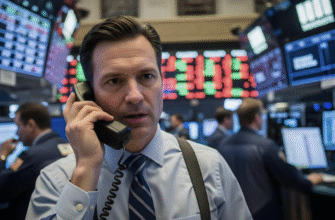
Trading during high-impact news events such as Non-Farm Payrolls (NFP), Consumer Price Index (CPI), central bank rate decisions, and GDP releases is one of the most dangerous activities a trader can engage in. The combination of extreme volatility, widened spreads, unpredictable price movements, and increased slippage creates a perfect storm that has destroyed more trading accounts than almost any other single cause. Yet many traders are drawn to news trading by the promise of fast profits, only to learn the hard way that the market during news is a fundamentally different environment from the market during normal conditions.
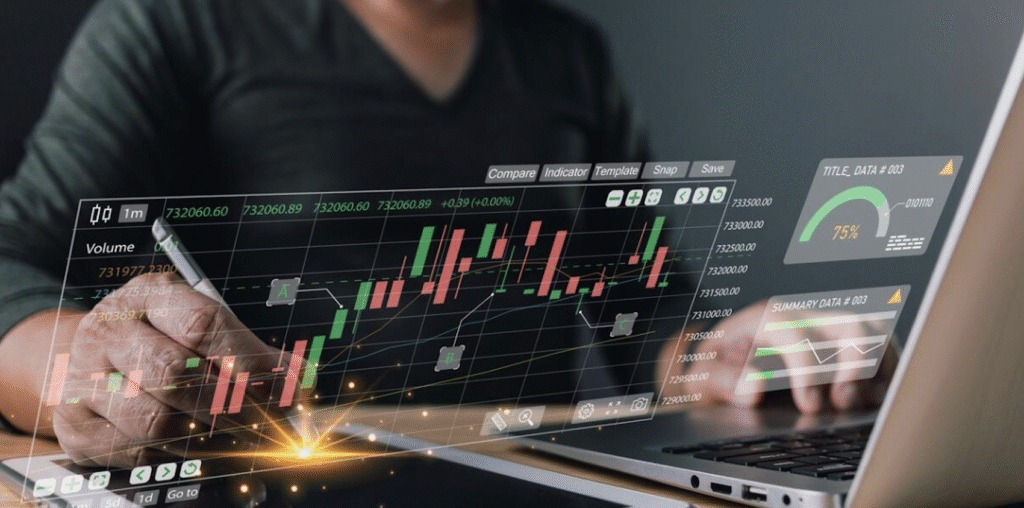
The primary danger of news trading is that it amplifies every risk factor simultaneously. Volatility can increase tenfold within seconds. Spreads that are normally 1 pip can widen to 20, 30, or even 50 pips. Stop losses may not execute at your expected price due to slippage. Price can gap through multiple support and resistance levels in an instant, rendering technical analysis useless. A trader who is properly positioned for normal market conditions can find themselves in a catastrophic loss situation within moments of a news release.
For prop traders, the dangers are even greater. Prop firms have strict drawdown limits, and a single news-driven loss can breach both daily and maximum drawdown thresholds simultaneously. Many prop firms explicitly prohibit trading during high-impact news events, and those that allow it often monitor news-period trading closely. Violating a firms news trading rules can result in immediate account termination, regardless of whether the trade was profitable.
Volatility Explained
Volatility during news events is fundamentally different from normal market volatility. Under normal conditions, price moves in a relatively continuous manner, with buyers and sellers matching orders at incremental price levels. During news releases, the order book can become severely imbalanced. A large influx of buy or sell orders can overwhelm market makers, causing price to jump discontinuously from one level to another. This phenomenon is known as a price gap.
Consider what happens during a Non-Farm Payrolls release. The report is released at 8:30 AM EST. Within the first second, trading volume can increase by 100x or more. Market makers, who normally provide liquidity by standing ready to buy and sell, widen their spreads dramatically to protect themselves from adverse selection. Some market makers withdraw entirely, waiting for the initial chaos to subside. The result is a thin, illiquid market where a relatively small number of aggressive orders can move price by dozens or even hundreds of pips in seconds.
The volatility during news is not just about magnitude — it is also about direction. Price often whipsaws violently, first spiking in one direction and then reversing sharply. This is sometimes called a “stop hunt” or “liquidity grab.” Large institutional orders trigger a cascade of stop losses, pushing price to an extreme, and then the market reverses as the initial panic subsides. Traders who are caught on the wrong side of the initial spike may be stopped out at a loss just before price reverses in their original direction.
Another characteristic of news volatility is that it is highly unpredictable. Two NFP releases with identical headline numbers can produce completely different price reactions depending on secondary details (such as the unemployment rate, wage growth, or revisions to previous data). Even experienced traders and algorithms struggle to interpret news data in real time, leading to erratic price action that can remain chaotic for minutes or even hours after the initial release.
Slippage Risks
Slippage is the difference between the price you expect to receive when placing an order and the price at which the order is actually executed. During normal market conditions, slippage is minimal — typically a fraction of a pip for major currency pairs. During news events, slippage can be catastrophic.
Here is how slippage works during news. You have a long position on EUR/USD at 1.0850 with a stop loss at 1.0820 (30 pips risk). The NFP report is released, and the data is strongly negative for the euro. Price gaps down from 1.0850 to 1.0800 within seconds. Your stop loss at 1.0820 is triggered, but the next available buyer is at 1.0790. Your order executes at 1.0790 — 30 pips worse than your stop price. What you thought was a 30-pip loss becomes a 60-pip loss. On a 2-lot position, that is $1,200 instead of $600 — double your planned risk.
Slippage affects both stop losses and entry orders. If you try to enter a trade during the news chaos, your market order may execute at a significantly worse price than you saw on your screen when you clicked the button. Limit orders will not protect you either — they may simply not get filled, leaving you without a position while the market moves away. The only order type that guarantees execution during news is a guaranteed stop loss, but these come at a premium cost and are not available on all instruments or with all brokers.
The worst-case slippage scenario is a flash crash or gap event. On January 15, 2015, the Swiss National Bank removed the EUR/CHF floor, causing the euro to crash nearly 30% against the Swiss franc in minutes. Traders who were short EUR/CHF with stop losses found their orders executing at prices 50%, 70%, or even 90% worse than their stop levels. Many traders lost more than their entire account balance, owing money to their brokers. Events like this are rare, but they illustrate the extreme tail risk of trading during news.
Risk Reduction Techniques
If you choose to trade during news events, these risk reduction techniques are essential:
1. Reduce Position Size by 50-75%. If your normal risk is 1% per trade, reduce to 0.25%-0.5% during news. The increased volatility means your stop loss will be wider, and slippage can multiply your loss. Smaller position sizes give you a larger margin of safety.
2. Widen Your Stop Loss. Normal stop distances do not work during news. Use 2x-3x your usual stop distance or use ATR-based stops (e.g., 3x ATR instead of 1.5x ATR). Combine wider stops with reduced position size to keep dollar risk constant.
3. Avoid Trading the Initial Spike. The first 30-60 seconds after a news release are the most dangerous. Price whipsaws, spreads are widest, and slippage is worst. Wait for the initial chaos to subside, then trade the established direction with tighter stops.
4. Use Guaranteed Stop Losses. If your broker offers guaranteed stops, use them during news. They cost more (wider spread or fee), but they protect you from catastrophic slippage. This is insurance, not an expense.
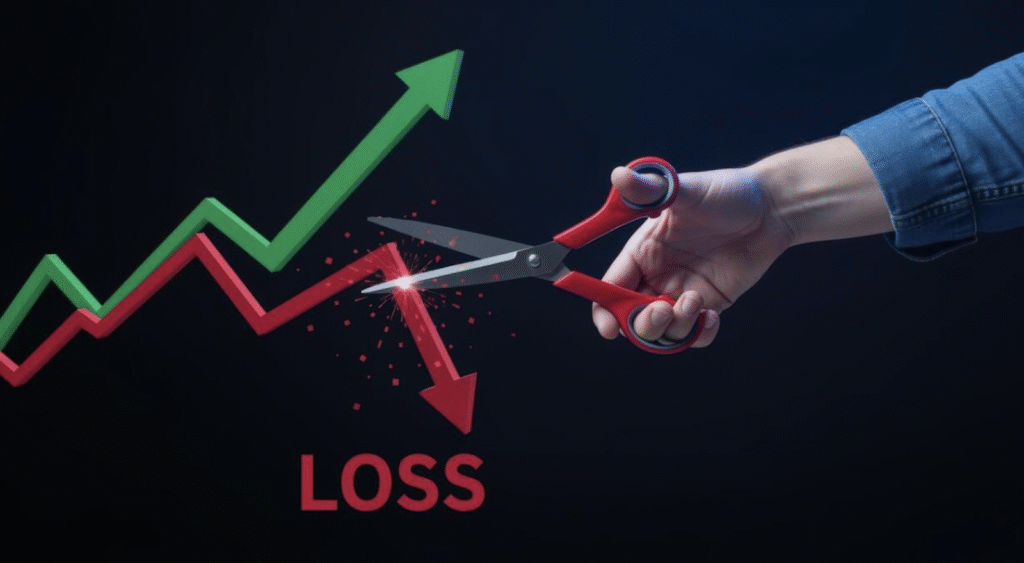
5. Set Maximum Loss Per News Event. Decide in advance the maximum you are willing to lose on any single news trade — e.g., 0.5% of your account. If the trade moves against you by that amount, exit immediately. Do not hold and hope.
6. Know Your Firms Rules. Many prop firms prohibit trading during high-impact news or have specific restrictions. Violating these rules can result in immediate account termination. Always check your firms policy before trading news.
Should You Trade News?
For most traders, especially beginners, the answer is no. News trading is a professional activity that requires experience, fast execution, sophisticated risk management, and the emotional discipline to act decisively in chaotic conditions. The risks far outweigh the potential rewards for traders who are still developing their core skills.
If you are a beginner, focus on trading during normal market conditions. Build your skills, develop your strategy, and establish consistent profitability before considering news trading. There is no shortage of opportunities in the regular market — you do not need the additional risk and complexity of news events.
If you are an experienced trader who wants to trade news, start by observing. Watch how price reacts to news releases for several months without risking real money. Study the patterns: the initial spike, the whipsaw, the eventual direction. Paper trade the news for at least 20 events before committing real capital. When you do start trading news, use the smallest possible position size and treat it as a learning expense, not a profit center.
The safest approach for most traders is to simply avoid trading during high-impact news. Close all open positions 15-30 minutes before the release and do not re-enter until at least 30-60 minutes after. This eliminates your exposure to news-driven volatility and slippage while ensuring you do not miss the longer-term trend that often develops after the initial chaos subsides.
Key Takeaways
- News trading is extremely dangerous due to extreme volatility, widened spreads, unpredictable price movements, and catastrophic slippage risk.
- During news events, volatility can increase tenfold. Price gaps, whipsaws, and stop hunts are common. Technical analysis often becomes useless.
- Slippage during news can turn a planned 30-pip loss into a 60- or 100-pip loss. In extreme cases (flash crashes), losses can exceed your account balance.
- Risk reduction techniques: reduce position size by 50-75%, widen stop losses, avoid the initial spike, use guaranteed stops, set maximum loss per news event, and know your firms rules.
- For most traders, especially beginners, the best approach is to avoid trading during high-impact news entirely. Close positions before the release and re-enter after the chaos subsides.
FAQ
Is news trading risky?
Yes, news trading is extremely risky. During high-impact news events, volatility can increase tenfold, spreads can widen from 1 pip to 50 pips, stop losses may execute at much worse prices due to slippage, and price can gap through multiple support and resistance levels in seconds. A single news trade can wipe out weeks or months of profits. For prop traders, a news-driven loss can breach daily and maximum drawdown limits simultaneously, resulting in account termination.
Should beginners avoid news?
Yes, beginners should absolutely avoid trading during high-impact news events. News trading requires experience, fast execution, sophisticated risk management, and emotional discipline under chaotic conditions. There is no rush — build your skills and achieve consistent profitability in normal market conditions first. The safest approach is to close all positions 15-30 minutes before major news releases and wait at least 30-60 minutes after the release before re-entering the market.
High-Impact News Events to Watch
Not all news events carry the same risk. Here are the highest-impact economic releases that traders should be aware of:
Non-Farm Payrolls (NFP). Released on the first Friday of every month at 8:30 AM EST by the US Bureau of Labor Statistics. NFP measures the change in the number of employed people in the US, excluding farm workers. It is one of the most watched economic indicators globally and consistently produces the largest volatility spikes in the forex market. EUR/USD, GBP/USD, and gold are particularly sensitive to NFP releases.
Consumer Price Index (CPI). Released monthly, CPI measures inflation by tracking changes in the price of a basket of consumer goods and services. High CPI readings can trigger expectations of central bank rate hikes, causing sharp currency movements. Core CPI (excluding food and energy) is often more important than the headline number.
Central Bank Rate Decisions. FOMC (Federal Reserve), ECB (European Central Bank), BoE (Bank of England), and other major central banks announce interest rate decisions on scheduled dates. These events can cause sustained multi-day moves in currency pairs. The post-decision press conference is often more impactful than the rate decision itself.
GDP Reports. Quarterly Gross Domestic Product releases measure economic growth. While important, GDP often produces less immediate volatility than NFP or CPI because it is a backward-looking indicator and is released with a delay.
Retail Sales. Monthly data on consumer spending, released around the middle of the following month. Strong retail sales indicate economic strength and can boost the currency. This release often produces moderate volatility but can surprise markets.
Practical Example: Trading NFP
Let us walk through a realistic scenario of how a disciplined trader approaches a Non-Farm Payrolls release.
The Setup. You have a $100,000 funded prop account. Your normal risk is 1% ($1,000) per trade with a 30-pip stop loss. NFP is scheduled for 8:30 AM EST on Friday. Your firms rules allow news trading but prohibit holding positions during the release.
Before the Release (8:00 AM). You review the economic calendar. The consensus forecast is +185,000 jobs, with the previous reading at +200,000. You decide to close all open positions by 8:15 AM, 15 minutes before the release. This eliminates your exposure to the initial spike.
The Release (8:30 AM). NFP comes in at +350,000 — nearly double the forecast. The initial reaction is a massive spike in the US dollar. EUR/USD drops 60 pips in 10 seconds, then whipsaws back up 40 pips, then drops another 30 pips. Spreads widen to 15-20 pips. You watch from the sidelines, not trading.
The Settlement (8:45 AM). After 15 minutes of chaotic trading, the market begins to settle. EUR/USD is now trading around 1.0780, down approximately 50 pips from the pre-news level of 1.0830. The initial whipsaw has subsided, and a clearer directional bias has emerged. Spreads have narrowed to 3-4 pips.
The Trade Entry (8:50 AM). You identify a potential short setup. Price has broken below a key support level at 1.0800 and is now retesting it from below. You decide to enter short at 1.0795 with a stop loss at 1.0825 (30 pips). Because this is still a higher-volatility environment, you reduce your position size. Instead of your normal 1% risk ($1,000), you risk 0.5% ($500). With a 30-pip stop, your position size is: $500 / (30 pips * $10) = 1.67 lots. You round to 1.6 lots.
Trade Management. The trade moves in your favor. EUR/USD continues to sell off, reaching 1.0730 by 10:00 AM — a 65-pip move. You trail your stop to breakeven and eventually exit at 1.0740 for a 55-pip profit. Your gain is 55 pips * $10 * 1.6 lots = $880, slightly under your 1% target but achieved with controlled risk.
Key Lessons. Notice what the trader did right: closed all positions before the release, waited for the initial chaos to subside, entered only after a clear directional bias emerged, used reduced position size, and took profit rather than getting greedy. The trader could just as easily have been on the other side of the trade — the point is not being right, but managing risk appropriately during an inherently dangerous period.