Price action is one of the most talked-about and often misunderstood approaches to trading. You’ll hear experienced traders say things like “price is the only indicator that matters” or “everything you need is already on the chart.” For a complete beginner, that can sound vague, even intimidating. This article is designed to remove that confusion.
If you are new to trading, especially in the context of prop trading, this guide will walk you through price action step by step, without jargon, hype, or unnecessary complexity. You’ll learn what price action really is, why professional traders rely on it, and how beginners can start using it responsibly. No shortcuts. No magic patterns. Just a clear, structured foundation.

- What Is Price Action?
- Why Price Action Matters for Beginners
- Candlesticks: The Language of Price Action
- Market Structure: The Backbone of Price Action Trading
- Support and Resistance: Where Price Reacts
- Price Action Patterns (Without Overcomplicating Them)
- The Role of Timeframes in Price Action
- Risk Management: Price Action Without Risk Is Gambling
- Price Action vs Indicators: A Practical Comparison
- How Prop Traders Use Price Action
- Common Beginner Mistakes in Price Action Trading
- How to Practice Price Action as a Beginner
- Key Takeaways
- FAQ
What Is Price Action?
At its core, price action is the study of how price moves over time. Instead of relying on lagging indicators like RSI, MACD, or moving averages, price action traders focus directly on price itself: highs, lows, opens, closes, and the story they tell.
Every candlestick on a chart represents a battle between buyers and sellers. Price action trading is about learning how to read the outcome of that battle.
Unlike indicator-based strategies, price action does not attempt to predict the market using formulas. Instead, it focuses on reacting to what the market is actually doing right now.
This approach is especially popular among:
- Professional discretionary traders
- Institutional and prop firm traders
- Traders who want cleaner charts and clearer decision-making
Why Price Action Matters for Beginners
Many beginners make the same mistake: they add too many indicators too early. The result is analysis paralysis conflicting signals, emotional decisions, and inconsistent performance.
Price action offers a different path.
By learning price action first, you:
- Understand how markets actually move
- Build intuition instead of dependency on tools
- Develop skills that work across all markets (stocks, forex, crypto, futures)
- Avoid overfitting strategies to indicators
In prop trading, where consistency and risk control matter more than flashy returns, price action is often the foundation firms expect traders to understand.
Candlesticks: The Language of Price Action
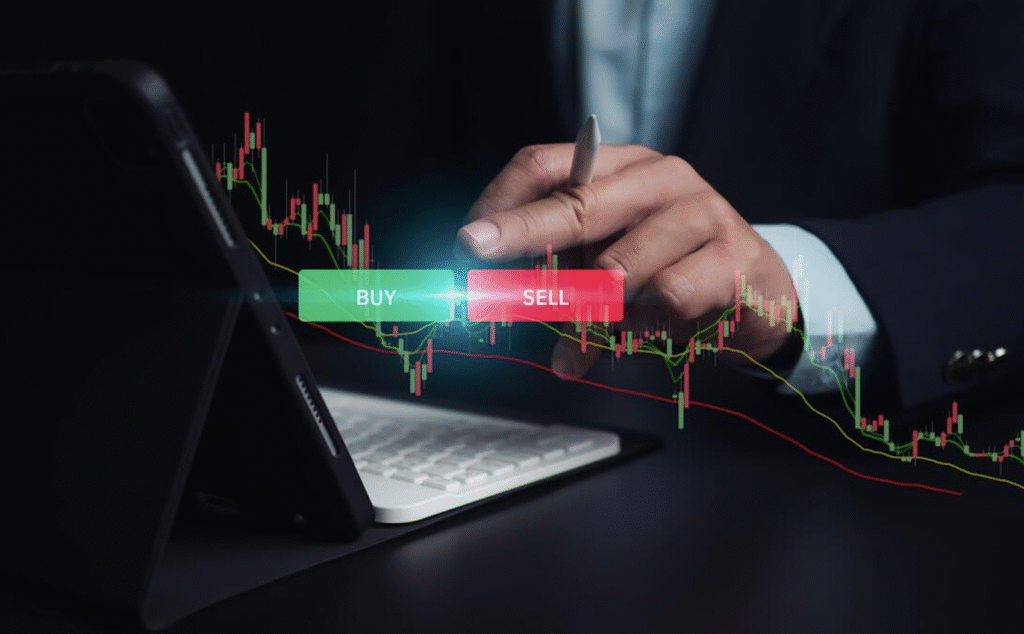
Price action is read primarily through candlestick charts. Each candle shows four key pieces of information:
- Open
- High
- Low
- Close
But the real value comes from how these candles form relative to one another.
A single candle means very little on its own. Price action is contextual. A bullish candle at random is noise; a bullish candle at a key support level tells a story.
Instead of memorizing dozens of candlestick names, beginners should focus on understanding:
- Candle size (momentum)
- Wick length (rejection)
- Closing price (control)
Large candles suggest strong participation. Long wicks show rejection. Tight ranges indicate indecision.
Market Structure: The Backbone of Price Action Trading
Before patterns or setups, price action begins with market structure.
Market structure describes how price moves from swing to swing:
- Higher highs and higher lows indicate an uptrend
- Lower highs and lower lows indicate a downtrend
- Overlapping swings suggest consolidation
Understanding structure helps you answer one essential question:
Is the market trending or ranging?
Most beginner losses come from trading against structure buying in downtrends or selling in uptrends often because indicators lag behind what structure already shows.
Support and Resistance: Where Price Reacts
Support and resistance are not exact lines. They are zones where price has historically reacted.
Support is an area where buying interest has previously stepped in. Resistance is where selling pressure has appeared.
Price action traders use these zones to:
- Anticipate potential reactions
- Frame risk and reward
- Avoid chasing price in the middle of ranges
A common beginner mistake is drawing too many levels. Professional traders focus on obvious, higher-timeframe zones that other market participants are likely watching.
If a level is not clear at first glance, it probably isn’t important.
Price Action Patterns (Without Overcomplicating Them)
Price action patterns are simply recurring behaviors in how price reacts at certain locations. They are not guarantees, and they do not work in isolation.
Some common concepts beginners encounter include:
- Rejection at support or resistance
- Breakouts followed by pullbacks
- Failed breakouts (false moves)
What matters is not the pattern name, but the context:
- Where did it form?
- What was price doing before?
- Is it aligned with the overall structure?
A small rejection candle at a major support level in an uptrend is very different from the same candle in the middle of nowhere.
The Role of Timeframes in Price Action
One of the most overlooked aspects of price action is timeframe alignment.
Higher timeframes (daily, 4-hour) define structure and key levels. Lower timeframes (1-hour, 15-minute) show execution details.
Beginners often make the mistake of trading low timeframes without higher-timeframe context. This leads to overtrading and emotional decisions.
A simple rule:
- Use higher timeframes for direction
- Use lower timeframes for entries
This top-down approach is widely used in prop trading because it improves consistency and reduces noise.
Risk Management: Price Action Without Risk Is Gambling
Price action does not replace risk management. In fact, it demands discipline even more than indicator-based systems.
Every price action trade should answer three questions before entry:
- Where is the trade invalidated?
- How much am I risking?
- Is the potential reward worth the risk?
Professional traders often risk a fixed percentage per trade, regardless of how “good” a setup looks.
In prop trading environments, violating risk rules is often more dangerous than taking a losing trade. Price action gives clarity, but risk management keeps you in the game.
Price Action vs Indicators: A Practical Comparison
Indicators are derived from price. Price action is price itself.
Indicators can be useful, but they:
- Lag behind price
- Simplify information (sometimes too much)
- Can conflict with each other
Price action requires more screen time and practice, but it develops deeper understanding.
Many experienced traders eventually strip their charts down to:
- Candlesticks
- Support and resistance
- Maybe one contextual indicator (like volume or a moving average)
For beginners, learning price action first creates a stronger long-term foundation.
How Prop Traders Use Price Action
In prop trading, consistency beats creativity.
Most funded traders are not looking for home-run trades. They focus on:
- High-probability locations
- Clean structure
- Controlled risk
Price action fits this environment perfectly. It adapts to different market conditions and does not rely on curve-fitted indicators that may stop working.
Prop firms also favor traders who can explain their reasoning. Saying “RSI crossed 30” is less compelling than explaining a rejection at a key level aligned with structure.
Common Beginner Mistakes in Price Action Trading
Learning price action takes time, and mistakes are part of the process. Some of the most common errors include:
- Trading every candle instead of waiting for clear setups
- Ignoring higher-timeframe structure
- Overanalyzing patterns instead of focusing on context
- Risking too much on a single trade
Price action is simple, but not easy. The goal is progress, not perfection.
How to Practice Price Action as a Beginner
The best way to learn price action is through intentional screen time.
Instead of jumping between strategies:
- Focus on one market
- Study historical charts
- Mark structure and key levels
- Observe how price reacts
Journaling is especially valuable. Write down what you saw, what you expected, and what actually happened.
Over time, patterns stop looking random. You begin to recognize familiar behaviors.
Key Takeaways
Price action is not a secret strategy or a shortcut to easy profits. It is a skill one built on observation, patience, and discipline.
For absolute beginners, price action offers:
- A clear way to understand market behavior
- A foundation that works across all markets
- A professional approach aligned with prop trading expectations
Mastering price action does not happen overnight, but it rewards those who commit to learning how markets truly move.
FAQ
Is price action suitable for complete beginners?
Yes. In fact, learning price action early helps beginners avoid overcomplicating trading with too many indicators.Do I need indicators to trade price action?
No. Price action can be traded without indicators, though some traders use minimal tools for context.How long does it take to learn price action?
Basic concepts can be understood in weeks, but consistency takes months of focused practice.Does price action work in all markets?
Yes. Price action principles apply to stocks, forex, crypto, futures, and indices.Is price action enough for prop trading?
For many funded traders, price action is the core of their strategy, combined with strict risk management.