A news trading strategy is built around one simple fact: major economic releases can change price direction, volatility, and liquidity in seconds. When a market reacts to new information, the move can be sharp and fast, which creates opportunity but also significant risk. That is why news trading attracts many traders and damages many of them at the same time.
The real edge in economic news trading does not come from guessing the headline alone. It comes from preparation, context, and execution discipline. In this guide, you will learn what news trading is, which economic events matter most, how traders prepare for releases, why volatility and slippage can distort the result, and how risk management becomes non-negotiable when trading news events.

- What Is News Trading
- Important Economic Events
- Preparing for News Releases
- Why Expectations Matter More Than the Number Alone
- Pre-Release Checklist
- How Price Often Behaves Before a Major Release
- When It Is Better Not to Trade the News
- Volatility and Slippage
- First Move vs Second Move
- Risk Management for News Trades
- Common News Trading Mistakes
- Key Takeaways
- FAQ
What Is News Trading
News trading means taking trades around scheduled economic releases or important market headlines that can move price quickly. These events often change expectations about interest rates, inflation, growth, or risk appetite, which is why currencies, indices, bonds, commodities, and sometimes crypto can react so aggressively.
A news trading strategy can take different forms:
- trading the immediate spike after the release,
- waiting for a retracement after the first move,
- trading a breakout from pre-news consolidation,
- trading the post-news directional continuation if the market accepts the new information.
Some traders try to capture the first reaction. Others intentionally avoid the first seconds and wait for the market to show real direction. Both approaches can work, but the second is often more manageable for discretionary traders because it reduces emotional impulse and extreme execution risk.
The key point is that news trading is not ordinary technical trading with a headline on the side. Market conditions change around news. Spreads widen, fills worsen, and patterns that looked reliable ten seconds earlier can become irrelevant immediately.
Important Economic Events
Not every calendar event matters equally. Some releases create noise, while others can reset expectations across entire asset classes. A trader using a news trading strategy should know which events are most likely to move the market they trade.
Common high-impact events include:
- Central bank decisions: rate changes, policy statements, press conferences, and forward guidance from institutions like the Federal Reserve, ECB, BOE, or Bank of Japan.
- Inflation data: CPI, core CPI, PCE, and similar reports that affect rate expectations.
- Labor market releases: Non-Farm Payrolls, unemployment rate, wage growth, and other employment reports.
- GDP and growth data: reports that change the macroeconomic outlook.
- PMI and business surveys: especially when they diverge sharply from expectations.
- Unexpected geopolitical or policy headlines: these are harder to plan for, but they can trigger extreme repricing.
Example: a CPI release that prints much hotter than expected may push bond yields higher, strengthen the dollar, and pressure equity indices. The market is not reacting to the number alone. It is reacting to how that number changes the probability of future policy decisions.
That is why scheduled releases should never be judged in isolation. The same data point can create a different move depending on expectations, positioning, and the broader macro environment.
Preparing for News Releases
Good preparation is the foundation of economic news trading. Entering a release with no plan usually turns the event into a coin flip, and a dangerous one.
A practical preparation routine includes:
- check the economic calendar and mark high-impact releases for the session,
- identify the affected instruments and which ones you may trade,
- review market expectations and prior data,
- mark key technical levels before the event,
- decide whether you will trade the reaction, wait for confirmation, or stay flat.
This is where many traders improve dramatically. Preparation reduces impulse. If you already know the event time, key levels, and your plan for different scenarios, you are far less likely to chase random movement.
Pre-news scenario planning:
- If the release strongly beats expectations and price accepts above resistance, look for continuation or retest longs.
- If the release misses expectations badly and price breaks support with follow-through, look for continuation shorts.
- If the first move is violent but immediately rejected, stand aside until the market shows whether it is a false breakout or real acceptance.
This type of planning matters more than trying to sound smart about macro headlines. A news trading strategy should be operational, not theoretical.
Why Expectations Matter More Than the Number Alone
Markets react to surprise, not only to the raw result. A strong number that was already expected may create little movement. A small miss relative to expectations can trigger a large reaction if positioning was one-sided.
This is why traders often compare:
- the actual number,
- the forecast,
- the previous reading,
- the current market narrative.
Without that context, it is easy to misunderstand why a seemingly good report causes a selloff or why a weak number fails to push the market lower.
Pre-Release Checklist
A short checklist can prevent many avoidable mistakes before trading news events:
- What is the exact release time in your timezone?
- Which market or instrument is most directly affected?
- What does the market currently expect?
- Where are the nearest key support and resistance levels?
- Will you trade the first move, the retest, or remain flat?
- What is the maximum risk for this event?
If any of these answers are unclear, the trade quality usually drops. A good news trading strategy starts long before the release candle appears.
How Price Often Behaves Before a Major Release
Markets often compress before major data. Volatility may shrink, price may hold inside a narrow range, and traders may avoid strong directional commitments until the information is released. This pre-news compression matters because it can create the levels that break during the event.
For example, if EUR/USD spends hours inside a tight range before Non-Farm Payrolls, the range high and low can become the most important reference points once the number hits. If price breaks and accepts beyond one side, continuation becomes more likely. If the break fails immediately, false-break logic becomes more relevant.
When It Is Better Not to Trade the News
Some events are simply not worth trading directly. It is often better to stay flat when:
- your platform has a history of bad execution during fast markets,
- the event is known for extreme two-way spikes and poor structure,
- you do not understand why the release matters for that instrument,
- the move is already extended before the event,
- you are emotionally charged and looking for a fast win.
Doing nothing is a valid professional decision. In many cases, the safest edge comes from waiting for the event to settle and then trading the cleaner post-news structure.
Volatility and Slippage
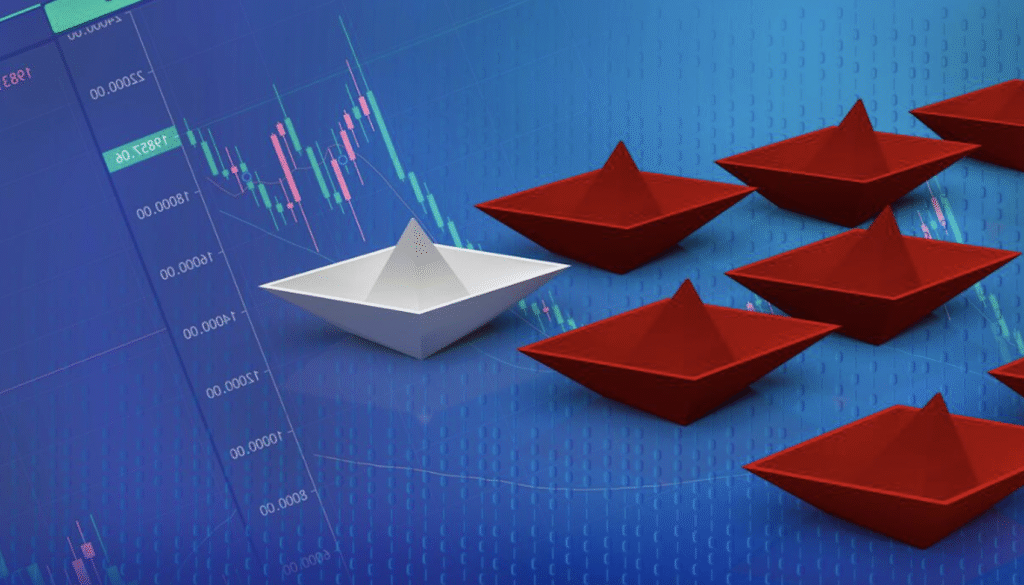
Volatility is the obvious feature of news trading, but slippage is often the hidden killer. During high-impact releases, price can move through your intended entry or stop so quickly that the fill happens at a much worse level than expected. At the same time, spreads can widen dramatically, which makes even a correct directional call less profitable than planned.
In practice, traders face several execution problems around major releases:
- market orders can fill far from the expected level,
- stop orders can be skipped through during violent movement,
- spread widening can trigger stops that were technically reasonable before the release,
- one candle can print both sides of the range before true direction appears.
Example: suppose EUR/USD is sitting near support before the ECB statement. The release hits, price spikes up, then down, then up again within seconds. A trader trying to click into the first move may get filled at a poor price, stopped out on a spread expansion, and then watch the market move in the original direction afterward. This is a common news-trading failure pattern.
That is why many traders choose a slower news trading strategy. Instead of trading the first burst, they wait for the initial volatility to settle and then trade the post-news structure. This often reduces raw upside, but it can improve consistency.
First Move vs Second Move
The first move after a release is often emotional, thin, and unstable. The second move is frequently more informative because it shows whether the market accepts the initial direction after the first burst of reaction.
A trader may wait for:
- the first spike to complete,
- a pullback or consolidation to form,
- acceptance above or below a key level,
- a lower-timeframe trigger for continuation.
This approach may feel less exciting, but it often aligns better with disciplined trading news events.
Risk Management for News Trades
Risk management is the core of a news trading strategy because event-driven conditions can invalidate normal assumptions about execution. If you trade news with ordinary size and ordinary expectations, the market can punish you quickly.
Core risk rules include:
- Use smaller size than usual: higher uncertainty and slippage justify lower exposure.
- Know whether you are trading the release or the aftermath: these are different strategies and should not be mixed in real time.
- Avoid holding random positions into major events: unless it is part of a planned macro trade, event exposure is often unnecessary risk.
- Accept that some events are not tradable: if conditions are too chaotic, the best trade may be no trade.
- Respect daily limits: one bad news event should not escalate into revenge trading.
Mini risk example: if a trader normally risks 1% per trade, reducing size to 0.25% or 0.5% around major releases may be more realistic. Even if direction is correct, execution quality can be worse than normal, so risk should reflect that environment.
Another overlooked rule is platform and liquidity awareness. If your broker or platform performs poorly during high-impact events, that is part of the trading risk. A news strategy must match the quality of your execution environment.
Common News Trading Mistakes
Several mistakes damage traders repeatedly:
- trading events they do not understand,
- clicking into the first spike with no plan,
- using normal position size during abnormal conditions,
- holding onto losing trades because the headline “should” still matter,
- chasing after the move is already extended.
The market does not reward urgency. It rewards preparation and discipline.
Key Takeaways
- A news trading strategy is built around scheduled or unexpected events that can change volatility and direction quickly.
- The most important economic events are usually central bank decisions, inflation releases, labor data, and major macro surprises.
- Preparation matters more than impulse, especially when trading news events with predefined scenarios.
- Volatility and slippage make news trading more dangerous than normal chart conditions.
- Risk management, smaller size, and selective participation are essential for survival.
FAQ
Is news trading risky?
Yes. News trading is one of the riskier styles because volatility, slippage, and spread widening can distort execution. That is why position sizing and preparation matter so much.
Which news events move markets the most?
Central bank decisions, inflation data, labor reports such as Non-Farm Payrolls, and major geopolitical headlines are usually among the strongest market movers.
Should beginners trade major economic releases?
Usually with caution. Many beginners do better by watching how markets react first and only trading the post-news structure, rather than trying to capture the initial spike.
Why does the market sometimes reverse right after good news?
Because markets react to expectations and positioning, not only to the raw headline. If the result was already priced in, or if traders take profits, the first reaction can reverse quickly.
Is it better to trade the first move or wait?
For many discretionary traders, waiting is safer. The first move can be noisy and unstable, while the later structure may show clearer direction and reduce execution risk.