
Drawdown recovery is one of the most critical skills for any prop trader facing evaluation challenges. When your account experiences a significant decline from its peak value, the psychological pressure can lead to impulsive decisions that jeopardize your entire challenge. This comprehensive guide provides a structured, professional approach to recovering from drawdowns while maintaining the discipline required to pass prop firm evaluations.
Unlike standard trading setbacks, drawdowns during prop firm challenges come with strict rules, time constraints, and psychological triggers that amplify emotional responses. Successful recovery requires more than just technical adjustments it demands a systematic approach to psychology, risk management, and strategic pacing. In this guide, you’ll learn not only how to stop the bleeding but how to implement a recovery plan that positions you for long-term success in funded trading accounts.
We’ll walk through immediate response protocols, diagnostic frameworks for different drawdown types, risk reduction strategies, and the mental models used by professional traders to navigate these challenging periods successfully.
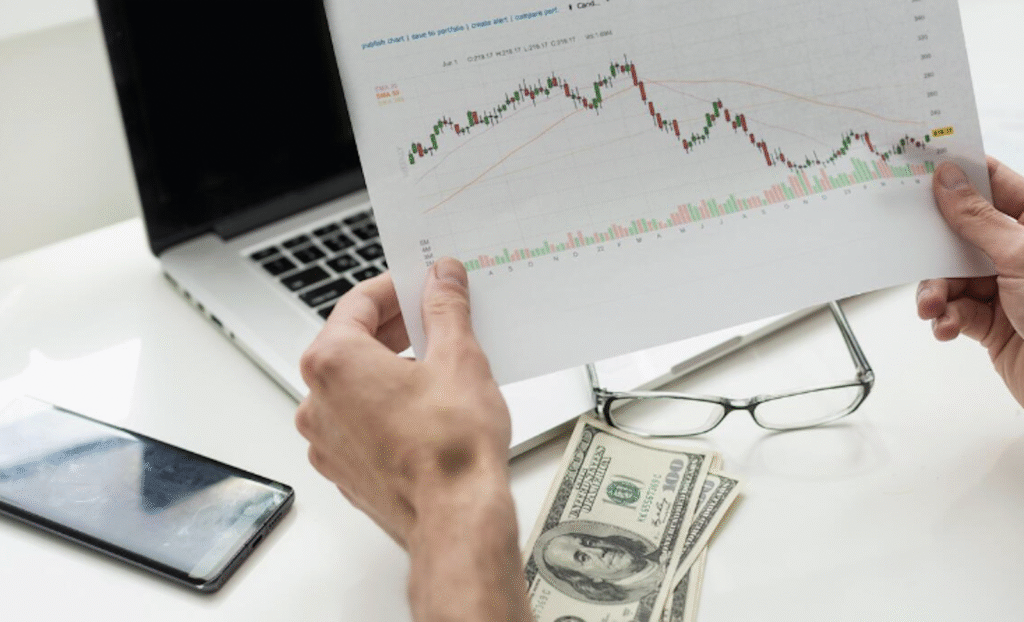
Experiencing a drawdown during a prop firm evaluation is one of the most common and psychologically challenging phases a trader faces. While drawdowns themselves are statistically normal in trading, the critical factor that determines success or failure is how a trader responds. Many promising challenges end not because of the initial losses, but due to the emotional and strategic mistakes made during recovery attempts.
This comprehensive guide provides a structured, practical framework for recovering from drawdown during a prop firm challenge. We will move beyond generic advice to deliver actionable steps, psychological insights, and real-world examples that help you stabilize your performance, rebuild confidence through disciplined process, and climb back toward your profit target without violating challenge rules.
- Understanding Drawdown Psychology: The Real Challenge
- Step 1: Immediate Response – Stop Trading and Assess Damage
- Step 2: Diagnose the Drawdown Type
- Step 3: Risk Reduction and Position Sizing Adjustment
- Step 4: Simplify Your Trading Universe
- Step 5: Implement a Structured Recovery Pacing Plan
- Tools and Metrics for Drawdown Management
- Key Takeaways
- FAQ
Understanding Drawdown Psychology: The Real Challenge
Before implementing technical recovery steps, it is essential to recognize the psychological traps that amplify drawdowns:
- Loss Aversion Bias: The pain of losses feels approximately twice as intense as the pleasure of equivalent gains, leading to irrational risk-taking.
- Sunk Cost Fallacy: “I have already lost X, so I need to trade more to get it back”—this thinking ignores current probabilities.
- Revenge Trading: Emotional trading aimed at “getting even” with the market rather than following a strategy.
- Overconfidence After Wins: Even during recovery, a few successful trades can trigger premature risk increases.
Successful recovery begins with acknowledging these mental patterns and implementing structural guards against them.
Step 1: Immediate Response – Stop Trading and Assess Damage
When you recognize you are in drawdown, your first priority is damage control, not recovery. This phase is about preventing the situation from worsening.
Actionable Protocol:
- Hard Stop for the Day: Implement a mandatory trading halt once you hit your personal daily loss limit (typically 1-2% of account).
- Rule Compliance Audit: Review every losing trade to determine if losses resulted from strategy variance or rule violations (overtrading, moving stops, trading outside hours).
- Buffer Calculation: Precisely calculate your remaining buffer to the maximum allowed drawdown. If below 25%, your approach must shift to preservation mode.
- Journal Entry: Document the emotional state, market conditions, and decision-making process that led to the drawdown.
Example Scenario: A trader with 00,000 challenge account hits a 3% drawdown (,000 loss). Maximum allowed drawdown is 10% (0,000). Remaining buffer is 7% (,000). At this point, the trader should reduce position sizes by 30-50% to extend the buffer duration.
Step 2: Diagnose the Drawdown Type
Effective recovery requires accurate diagnosis. Drawdowns generally fall into three categories, each requiring different responses:
- Process Drawdown: Losses caused by breaking your own rules. Characterized by overtrading, revenge trades, moving stops, or trading outside designated hours. Solution: Focus exclusively on rule compliance, not profitability.
- Strategy Drawdown: You followed rules, but market conditions changed (volatility shifted, correlations broke, liquidity dried up). Solution: Reduce activity, adjust filters, or temporarily pause until conditions normalize.
- Variance Drawdown: Statistically normal losing streak within your strategy is expected performance distribution. Solution: Maintain course but verify strategy edge has not deteriorated.
Diagnostic Checklist: Review your last 10-20 trades. If more than 30% involved rule deviations, you are in a process drawdown. If rules were followed but setups failed consistently, consider strategy or variance drawdown.
Step 3: Risk Reduction and Position Sizing Adjustment
During recovery, stability supersedes growth. A temporary risk reduction serves multiple purposes:
- Reduces emotional pressure by decreasing potential loss magnitude
- Extends your time horizon by preserving remaining drawdown buffer
- Creates psychological space to focus on execution quality
Practical Implementation:
- Baseline Reduction: Cut position sizes by 25-50% from your normal sizing.
- Progressive Restoration: Only increase sizing after 3-5 consecutive days of clean, rule-compliant execution.
- Maximum Daily Loss Limit: Reduce your personal daily loss limit by 30-40% during recovery phase.
Mathematical Example: Normally you risk 0.5% per trade (00 on 00k). During recovery, reduce to 0.25-0.35% (50-50). This cuts potential daily loss from 2% (,000) to 1-1.4% (,000-,400), significantly extending your buffer.
Step 4: Simplify Your Trading Universe
Complexity is the enemy of recovery. When in drawdown, eliminate optionality and focus exclusively on your highest-probability setups.
Simplification Framework:
- Single Setup Focus: Trade only your “A+” pattern—the one with the clearest entry signals, invalidation levels, and historical edge.
- Reduced Instrument List: Limit to 1-2 correlated instruments rather than diversifying across multiple markets.
- Time Window Restriction: Trade only during your historically most productive hours.
- Daily Trade Limit: Cap yourself at 2-3 trades maximum per day during recovery.
Quality Over Quantity: The goal is not to “trade your way out” but to execute a small number of high-quality trades that rebuild confidence in your process.
Step 5: Implement a Structured Recovery Pacing Plan
Recovery should follow a deliberate, measurable progression rather than aggressive attempts to “make back losses.”
Sample 7-Day Recovery Plan:
- Days 1-2 (Stabilization): Focus exclusively on rule compliance. Trade only 1-2 A+ setups with reduced size. Profit target: break-even or small gains.
- Days 3-4 (Consolidation): Maintain reduced sizing. Add one additional setup if rule compliance remains perfect. Profit target: 0.2-0.5% daily.
- Days 5-7 (Gradual Restoration): If consistently compliant, consider slight size increase (10-20%). Continue focusing on process over results.
Key Metric: Track “clean execution days” (days with zero rule violations) rather than profit/loss. Recovery is complete when you achieve 5+ consecutive clean execution days.
Tools and Metrics for Drawdown Management
Key Takeaways
- Drawdowns are statistically normal; the critical factor is your response, not the drawdown itself.
- Immediate damage control through trading halts and rule audits prevents minor drawdowns from becoming catastrophic.
- Accurate diagnosis (process vs strategy vs variance drawdown) determines appropriate recovery tactics.
- Temporary risk reduction (25-50% size cuts) creates psychological and financial breathing room.
- Simplification—trading only A+ setups with strict limits—rebuilds confidence through quality execution.
- Structured recovery pacing focuses on process metrics (clean execution days) rather than aggressive profit targets.
- Psychological awareness of loss aversion, sunk cost fallacy, and revenge trading prevents emotional decision-making.
FAQ
Q: Can you realistically recover from a significant drawdown during a prop firm challenge?
A: Yes, provided you implement disciplined damage control first. Most failures occur when traders attempt recovery before stabilizing—they increase risk prematurely or violate rules trying to “catch up.” A methodical, process-focused approach allows recovery from drawdowns up to 6-7% if sufficient buffer remains.
Q: How long should a recovery phase typically last?
A: A structured recovery phase generally spans 7-14 trading days. The goal is not to recover the entire drawdown quickly, but to establish 5+ consecutive days of clean, rule-compliant execution. Profit recovery follows naturally once discipline is restored.
Q: Should you completely stop trading after a drawdown?
A: A 1-2 day complete break is advisable if rule violations occurred or emotional state is compromised. However, extended breaks can lead to loss of rhythm. The ideal approach is to return with significantly reduced activity (1-2 trades/day) rather than complete cessation.
Q: How do you know when to increase risk again after recovery?
A: Risk should only be increased after achieving both: (1) 5+ consecutive days of perfect rule compliance, and (2) consistent execution of your A+ setups. Increases should be gradual—10-20% increments every 3-5 clean trading days.
Q: What is the most common psychological mistake during drawdown recovery?
A: The “double-or-nothing” mentality—increasing risk to recover losses quickly. This ignores probability and turns a normal variance event into a likely failure. Successful traders accept that recovery requires patience and process discipline, not aggression.